California Whistleblower Laws: Understanding Your Rights Against Retaliation
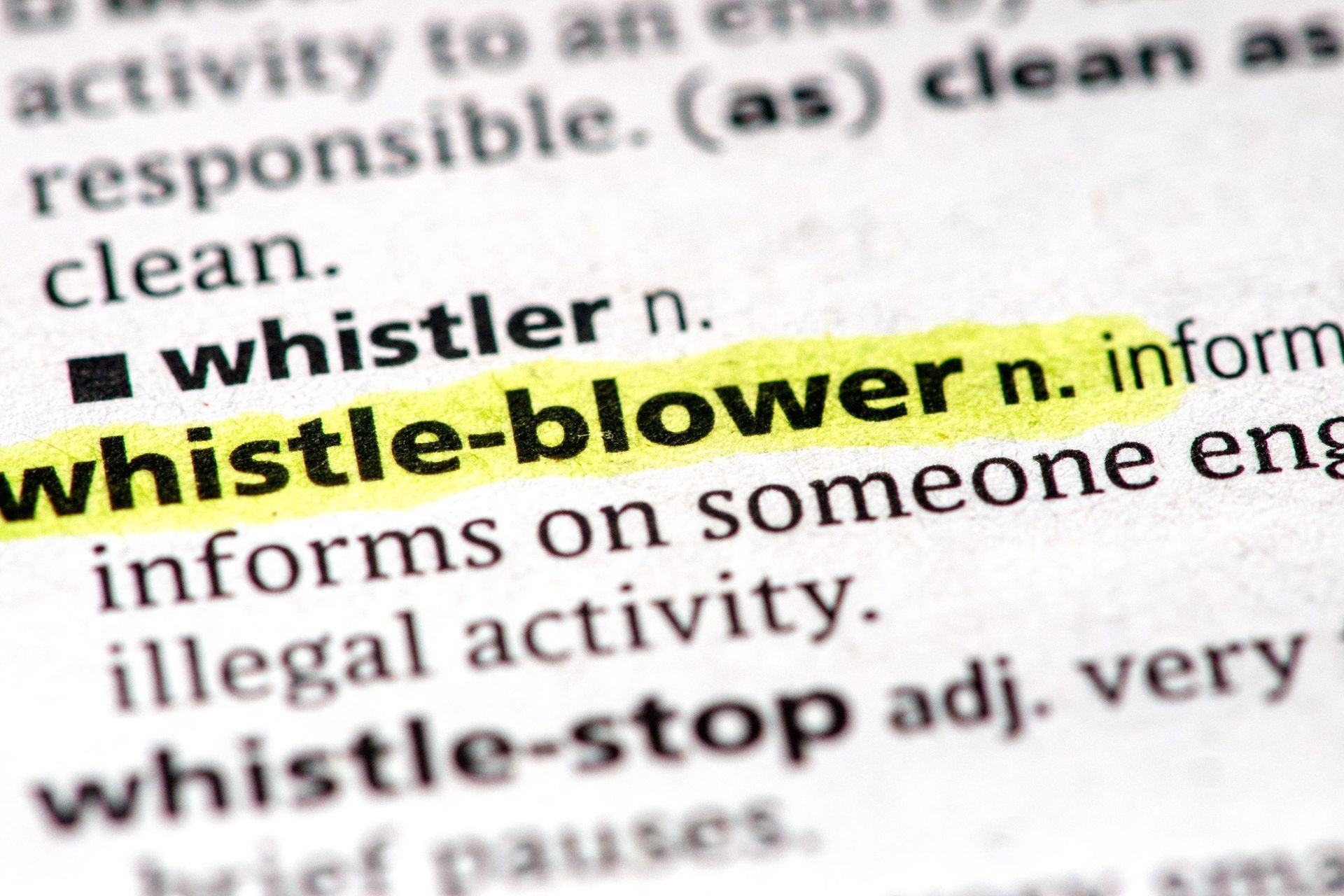
Can your employer punish you for speaking up?
In many situations, the answer is no. Whistleblower protection in California exists to help protect employees who report illegal activity or refuse to participate in conduct that violates the law. Even so, retaliation still happens. Employees may suddenly receive poor performance reviews, lose promotions, have their hours reduced, or even lose their jobs after reporting a problem.
Understanding your rights can make a significant difference if you believe your employer retaliated against you after you spoke up.
Many employees notice something at work that doesn't seem right. It could be wage theft, safety violations, discrimination, fraud, harassment, patient care issues, environmental violations, or another type of unlawful conduct. Reporting those concerns takes courage.

What Is a Whistleblower?
A whistleblower is generally an employee who reports conduct they reasonably believe violates the law. That report may be made internally to a supervisor or human resources department, or externally to a government agency, depending on the circumstances.
Examples include reporting:
- Wage and hour violations
- Workplace safety hazards
- Healthcare fraud
- Government contract fraud
- Environmental violations
- Financial misconduct
- Discrimination or harassment
- Patient abuse or neglect
- Consumer fraud
- Violations of state or federal regulations
The law recognizes that employees are often the first people to discover misconduct inside a company. Protecting those employees helps encourage reporting before problems become even larger.
California Has Strong Whistleblower Protection Laws
California has some of the strongest employee protection laws in the country. While every case depends on its specific facts, state law generally prohibits employers from retaliating against workers who engage in protected whistleblowing activities.
Protected activity may include:
- Reporting suspected violations of law
- Refusing to participate in illegal conduct
- Providing information during a government investigation
- Cooperating with regulatory agencies
- Testifying in legal proceedings involving workplace violations
- Reporting violations internally before contacting outside agencies
One important point many employees misunderstand is that you do not necessarily have to prove the employer actually broke the law. In many cases, protection may apply if you had a reasonable belief that unlawful conduct was occurring.
That distinction matters because employees often hesitate to report concerns when they are unsure whether they have enough evidence.
Retaliation Is Not Always Obvious
Many people think retaliation only means being fired.
Sometimes it does.
Other times it happens gradually. An employee who had years of positive evaluations suddenly begins receiving criticism after reporting misconduct. Responsibilities disappear. Promotions stop. Schedules change. The workplace becomes hostile.
Possible signs of retaliation include:
- Termination
- Demotion
- Pay reductions
- Reduced work hours
- Unwanted schedule changes
- Transfer to less desirable positions
- Loss of overtime opportunities
- Poor performance reviews that appear inconsistent
- Exclusion from meetings or projects
- Denial of promotions
- Increased disciplinary actions
- Harassment by supervisors or coworkers
- Threats or intimidation
One action by itself may not always establish retaliation. Looking at the overall timeline and surrounding circumstances often provides a much clearer picture.
Timing Can Become Important
Many whistleblower cases involve timing.
Suppose an employee reports suspected fraud on Monday. Two weeks later, the employee suddenly receives their first disciplinary write-up after years of positive reviews. A month later, they are terminated for reasons that seem inconsistent with their work history.
That timing alone does not automatically prove retaliation.
However, it can become an important part of the overall evidence when combined with emails, witness testimony, company records, and other documentation.
This is one reason employees often benefit from saving records as issues develop rather than trying to recreate events months later.
Documentation Can Strengthen Your Position
Employees sometimes rely entirely on memory after experiencing retaliation. Unfortunately, memories fade.
When possible, keeping organized records may help preserve important details.
Helpful documentation may include:
- Copies of performance evaluations
- Emails related to reported concerns
- Text messages from supervisors
- Meeting notes
- Written complaints
- HR communications
- Pay records
- Schedule changes
- Disciplinary notices
- Employee handbook policies
- Names of witnesses
- Dates when important events occurred
Employees should always obtain documents legally. Company policies, confidentiality obligations, and privacy laws still apply. Taking confidential information improperly can create separate legal issues.
Good documentation does not guarantee success, but it often provides valuable context when evaluating a potential claim.
Internal Reports May Still Be Protected
Some employees believe they must report directly to a government agency before whistleblower laws apply.
That is not always true.
Many whistleblower cases begin with internal complaints. Employees often first report concerns to:
- Their immediate supervisor
- Human resources
- A compliance department
- Company ethics hotline
- Upper management
- Internal legal department
Making an internal report may still qualify as protected activity under California law depending on the circumstances.
Because every situation differs, employees should avoid assuming they have no protection simply because they first raised concerns inside the company.
Industries Where Whistleblower Claims Commonly Arise
Whistleblower cases can happen in nearly every profession. Certain industries, however, tend to generate more reports because of regulatory requirements or public safety concerns.
Examples include:
- Healthcare
- Construction
- Government contractors
- Banking and financial services
- Technology companies
- Manufacturing
- Education
- Transportation
- Hospitality
- Retail
- Public agencies
- Pharmaceutical companies
The underlying issue may be different from one workplace to another, but retaliation concerns often look surprisingly similar.
Not Every Workplace Disagreement Is Whistleblowing
It is also important to understand what whistleblower laws generally do not cover.
Simply disagreeing with management or having personality conflicts usually is not enough by itself. The legal issue typically centers on reporting unlawful conduct or refusing to participate in illegal activity.
Situations that may not qualify include:
- Ordinary workplace disagreements
- Personality conflicts
- Disputes over management style
- General complaints about workload
- Preference for different business decisions
- Frustration with coworkers when no legal violation is involved
That does not necessarily mean an employee has no legal rights. Other employment laws may apply depending on the circumstances.
Understanding which laws fit your situation is often one of the first questions to discuss with an attorney.
When to Speak with a Whistleblower Lawyer
Employees often wait until after they have been fired before talking with an attorney. In some situations, that may be too late to preserve important evidence or fully understand their legal options.
If you believe retaliation may already be happening, speaking with a California whistleblower lawyer early can help you better understand your rights before making additional decisions.
You may want to consider when to speak with a whistleblower lawyer if you have experienced any of the following:
- You reported suspected illegal conduct at work.
- Your employer began treating you differently after your report.
- You were suddenly disciplined despite a strong work history.
- Your hours, pay, or responsibilities were reduced.
- You were demoted or terminated after raising concerns.
- You have been asked to participate in conduct you believe violates the law.
- Human resources dismissed your complaint without investigating.
- You are unsure whether your situation qualifies as whistleblower retaliation.
Every workplace is different. Even if you are uncertain whether your situation falls under California whistleblower laws, getting answers early may help you avoid mistakes that could affect your case later.
What Should You Do If You Think Retaliation Has Started?
It is easy to react emotionally after being disciplined or terminated. That reaction is understandable. Still, your next steps matter.
Instead of making assumptions, try to focus on preserving information and documenting what happened.
Some practical steps include:
- Continue documenting important events.
- Save copies of lawful communications and records.
- Write down dates while they are still fresh in your memory.
- Avoid deleting emails or text messages that may become relevant.
- Follow company policies when appropriate.
- Avoid confrontations that could create additional workplace issues.
- Consider speaking with an employment attorney before signing any separation agreement or release.
Many employees are offered severance agreements shortly after termination. Those documents may include legal rights that are waived in exchange for compensation. Before signing anything, it is often worth understanding exactly what you are agreeing to.
Taking a careful approach today may leave you with more options tomorrow.
How a California Whistleblower Lawyer Can Help
Whistleblower cases often involve much more than one conversation or one disciplinary action. An attorney's job is to look at the entire sequence of events and determine whether the facts support a legal claim.
Depending on the circumstances, a lawyer may help by:
- Reviewing your timeline of events.
- Evaluating whether your report may qualify as protected activity.
- Examining employment records and company policies.
- Identifying evidence that supports or weakens a claim.
- Explaining available legal options.
- Communicating with the employer when appropriate.
- Pursuing compensation if retaliation occurred.
- Representing you throughout negotiations or litigation if necessary.
Sometimes employees discover they have stronger claims than they originally realized. Other times they learn that different employment laws may provide better legal remedies than whistleblower statutes alone.
That is one reason an individual review of the facts is so important.
Whistleblower Claims Often Overlap with Other Employment Law Issues
Retaliation rarely exists in isolation.
Many employees who report misconduct also experience other workplace violations before or after speaking up. Looking at the full picture is often necessary when evaluating a potential case.
Examples of related legal issues may include:
- Wrongful termination
- Workplace discrimination
- Sexual harassment
- Failure to accommodate disabilities
- Wage and hour violations
- Unpaid overtime
- Meal and rest break violations
- Family and medical leave issues
- Failure to prevent harassment or retaliation
An experienced employment attorney will typically evaluate every possible legal claim rather than focusing on only one issue.
Every Case Depends on the Facts
No two whistleblower cases look exactly alike.
One employee may report patient safety concerns at a hospital. Another may report payroll fraud, environmental violations, or financial misconduct. The industries differ. The facts differ. The evidence differs.
That is why online articles should never replace legal advice about your own situation.
If you believe your employer retaliated after you reported unlawful conduct, asking questions early can help you understand where you stand and what options may be available.
Frequently Asked Questions
1. What is whistleblower protection in California?
Whistleblower protection in California refers to laws that prohibit employers from retaliating against employees who report suspected violations of the law, refuse to participate in unlawful conduct, or cooperate with government investigations. Depending on the circumstances, protected employees may have legal remedies if retaliation occurs.
2. Can I be fired for reporting illegal activity at work?
California law generally prohibits employers from firing employees because they reported conduct they reasonably believed violated the law. However, every situation is fact-specific. If you were terminated after making a report, speaking with a California whistleblower lawyer can help you determine whether your rights may have been violated.
3. Do I have to report the problem to a government agency first?
Not necessarily. Many employees first report concerns to a supervisor, human resources department, compliance officer, or company hotline. Internal reports may still qualify for legal protection depending on the circumstances.
4. What evidence helps prove whistleblower retaliation?
Useful evidence may include:
- Emails and text messages
- Performance evaluations
- Written complaints
- HR records
- Disciplinary notices
- Pay records
- Witness statements
- A timeline showing when reports were made and when retaliation occurred
The stronger the documentation, the easier it may be to understand how events unfolded.
5. When should I speak with a whistleblower lawyer?
Many employees wait until after termination, but that is not always the best approach. If you are wondering when to speak with a whistleblower lawyer, the answer is often as soon as you believe retaliation has started or you are preparing to report unlawful conduct. Early legal guidance may help you protect important evidence and better understand your rights.
6. What compensation may be available in a whistleblower retaliation case?
Every case is different. Depending on the facts, employees may seek compensation for lost wages, lost benefits, emotional distress, attorney's fees when allowed by law, and other available remedies. An attorney can explain which forms of recovery may apply to your specific circumstances.
Contact Our California Whistleblower Lawyers
Speaking up about unlawful conduct should not cost you your career. If you believe you experienced retaliation after reporting illegal activity, refusing to participate in unlawful conduct, or cooperating with an investigation, you do not have to sort through these issues by yourself.
Our team is available to answer your questions, review your situation, and help you understand whether California whistleblower laws may apply to your case. We also encourage you to learn more by visiting our Whistleblower Lawyers practice area page for additional information about your legal rights and the protections that may be available.
loyees discover there may be additional wage claims beyond the missing paycheck itself.
Share on Social Media